A window is a hole in your wall that you have decided to live with. Everything that makes that hole comfortable — the warmth it keeps in, the noise it keeps out, the fact that it still opens smoothly after ten winters — depends on a component most people never think about until it fails: the frame.
Glass gets the attention. It is the part you can see through, the part with the coatings and the gas fill and the little sticker in the corner. But glass is rigid and brittle and completely useless on its own. The frame is what holds it in place, seals it against rain and wind, carries the hardware, and decides whether the whole assembly is a sensible piece of building science or an expensive draft. Choosing a frame material is really a question about your climate, your house, and how much maintenance you are honestly willing to do.
What the Frame Actually Does
A frame has four jobs, and they sometimes pull against each other. It has to be strong enough to hold the sash and glass without sagging. It has to insulate, because the frame is a thermal bridge running around the edge of every pane. It has to manage water — shedding rain, draining condensation, and drying out after a storm. And it has to keep working through movement, because materials expand in summer heat and contract in winter cold, and the window has to accommodate that without cracking seals or jamming shut.
No material wins on all four counts. That is the whole story of this decision, and it is why the right answer for a coastal villa and the right answer for a mountain cottage are rarely the same.
Vinyl (uPVC): The Low-Effort Default
Vinyl, or unplasticised polyvinyl chloride, is the most common residential frame material in much of Europe and North America, and it earned that position honestly. The profiles are hollow, often divided into multiple internal chambers that trap air and slow heat loss. Corners are usually welded rather than screwed together, which produces a continuous, watertight joint. There is nothing to paint, nothing to sand, and a damp cloth handles most of the cleaning.
Where it works
- Mixed and temperate climates with real winters and warm summers — vinyl handles both without complaint.
- Humid or rainy regions, because the material does not rot, swell, or absorb water.
- Owners who want a low-maintenance house and would rather not think about their windows again for a decade.
- Tighter budgets, where vinyl generally sits at the more affordable end of the range while still offering good thermal performance.
Where it falls short
Vinyl is not the stiffest material, so very large panes in wide frames can call for steel or aluminium reinforcement inside the profile — ask whether yours has it. Its surface finish is not as scratch-resistant as painted aluminium, and darker colours can fade or chalk over time in strong sun; lighter tones hold up better. And the aesthetic ceiling is real: if you live in a house with traditional proportions, vinyl will look like vinyl.
Wood: The Material You Have to Court
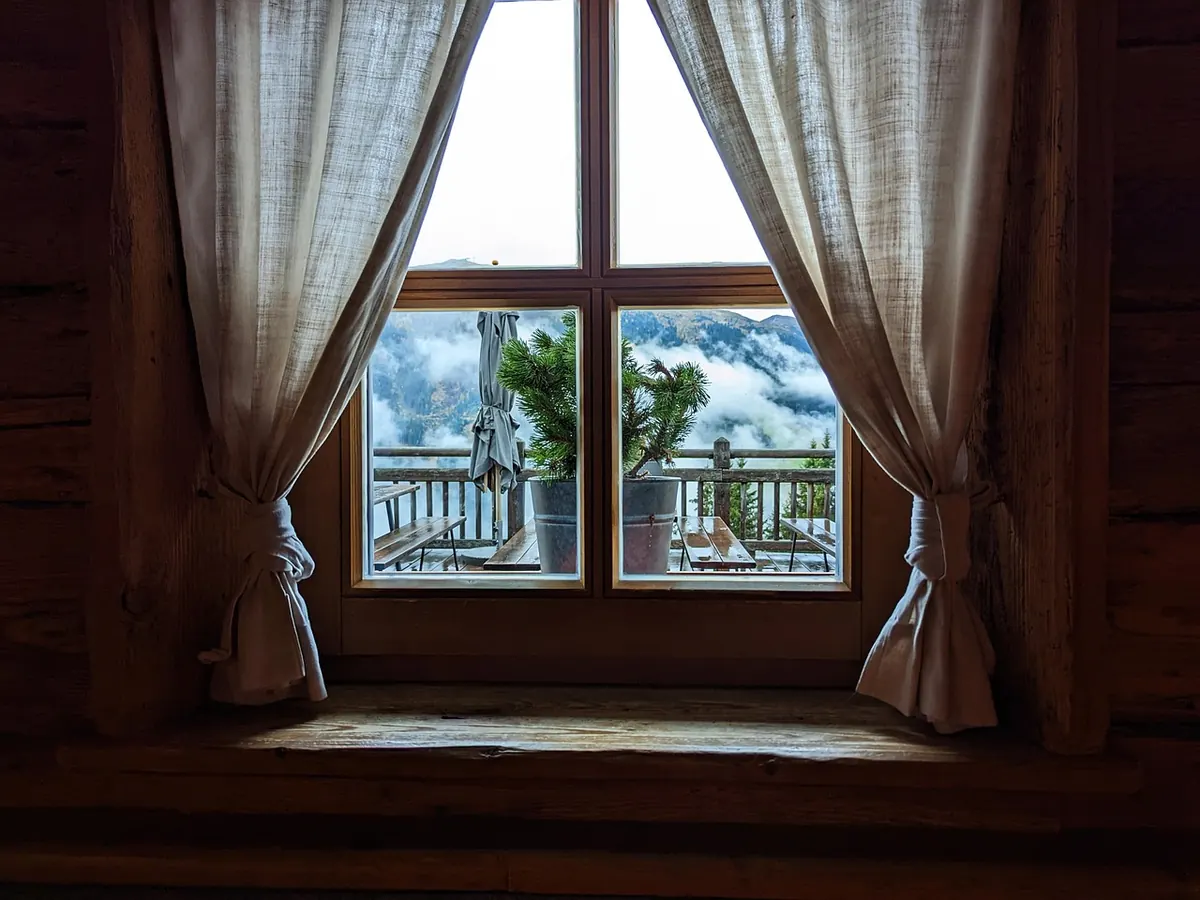
Wood remains the best-looking frame material and, in many ways, the most pleasant to live with. It is a natural insulator — far better than aluminium, comparable to or slightly better than a decent vinyl profile — and it does not get uncomfortably cold to the touch. It can be repaired rather than replaced, it takes paint and stain beautifully, and it suits older architecture in a way no extrusion can imitate.
The trade-off is that wood is alive in a way the other materials are not. It moves with humidity, it can rot if water sits on it, and it depends on you.
A well-maintained wooden window can outlast the house. A neglected one will need replacing within a decade. The difference is usually a few hours of work every two to three years.
In practice this means checking the seals and painted surfaces each autumn, touching up any spot where bare timber shows, and keeping the sill and drainage channels clear. Weather-exposed sides need more attention than sheltered ones. If that sounds reasonable, wood is a superb choice. If it sounds like a chore you will postpone, look at aluminium-clad wood, which puts a factory-finished aluminium shell on the exterior and leaves the timber visible inside — you get the look without the annual painting.
Aluminum: Slim, Strong, and Often Misunderstood
Aluminium's reputation suffers from the single-glazed windows of the 1970s, which conducted heat straight out of the room and condensed so heavily that the sills ran with water. Modern aluminium is a different product. The good stuff uses a thermal break: the frame is split into inner and outer sections joined by an insulating barrier, usually a reinforced polyamide strip, so the cold outside does not travel directly to your living room.
That construction makes aluminium the strongest option relative to its size. If you want large fixed panes, floor-to-ceiling glazing, or narrow sightlines that maximise glass and minimise frame, aluminium and aluminium-clad products are hard to beat. It does not rot, it does not warp, it does not care about rain, and the powder-coated finish — particularly the anodised or matte architectural finishes — holds up well for a long time with simple washing.
Two cautions. First, on thermal performance, an aluminium window without a proper thermal break will undo much of the value of good glazing; always ask to see the profile cross-section. Second, aluminium is a good conductor, so the interior surface of a window in a cold climate will feel cooler than a wooden one, which can mean more edge condensation unless the frame design and the glazing gap are right.
Fiberglass: The Quiet Performer
Fiberglass (glass-reinforced polymer) frames are pultruded — pulled as continuous profiles through a heated die — which gives them a very high strength-to-weight ratio and, usefully, a rate of thermal expansion close to that of glass itself. When the frame and the glass move together, seals and gaskets last longer. Fiberglass also insulates well, does not corrode, and can be finished in a range of colours that hold up in sun.
It is less common than the other three, sometimes harder to find locally, and typically priced above vinyl. In very cold climates, in coastal settings with salt air, and in projects where durability matters more than the upfront line item, it is worth going out of your way to see. Ask suppliers whether the profile has a hollow core, a filled core, or a foam-insulated core, because that affects both thermal performance and how solidly the frame takes screws and hardware.
Matching the Material to Your Climate
There is no universal ranking. What follows is a starting point, not a verdict — the quality of the specific product matters more than the category name.
- Cold winters, heavy snow: wood, foam-filled vinyl, or fiberglass. Insisting on a thermal break in aluminium is non-negotiable here.
- Hot, sunny summers: light-coloured vinyl, aluminium with a heat-reflective glazing package, or fiberglass. Dark frames in strong sun will run hot and fade faster.
- Coastal salt air: aluminium and fiberglass handle salt well; vinyl is fine; bare timber needs a robust finish and more frequent inspection.
- Wet, damp climates: vinyl, aluminium, or fiberglass, all with properly designed drainage and weep channels. Rot-prone timber needs particular care.
- Traditional or protected buildings: timber, or timber with a low-profile cladding system, for the visual fit.
Questions to Ask Before You Sign
Whatever the material, the frame is only as good as its fabrication and installation. Ask whether the profile is reinforced, and where. Ask to see a cross-section, not a photo. Find out what the warranty covers — a long guarantee on the frame that excludes the finish or the hardware is not much of a guarantee. Confirm the U-value for the whole window rather than the glass alone, because the frame is part of the calculation.
And when you compare quotes, compare the details: how the corners are joined, what the drainage path looks like, whether the hardware is adjustable, and how the installer handles the gap between frame and wall. That last point matters more than most people expect — a superb window fitted badly will leak. A window is a system of frame, glass, seal and installation, and the frame is simply where the promise starts.
Photo: JoergFunk / Pixabay